




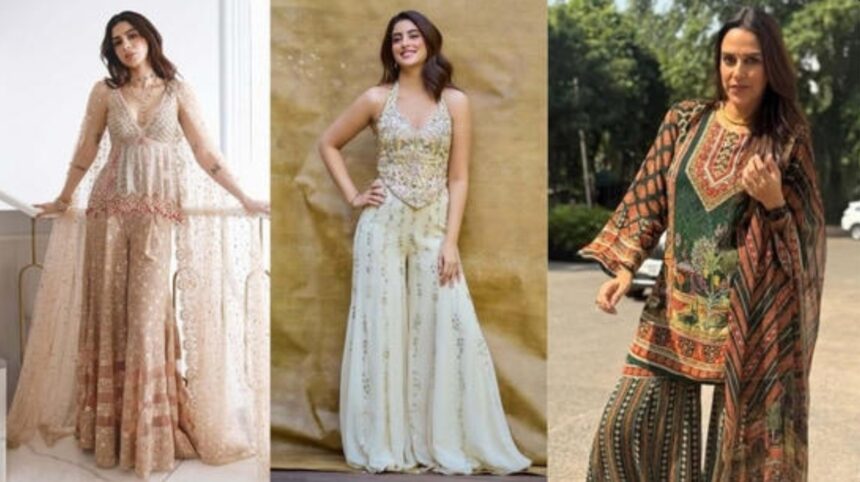
As Ramzan approaches, wardrobes gradually transform. Light muslins and breathable fabrics dominate iftar evenings, while silks, brocades, and ornate embroideries are reserved for Eid celebrations. Among evolving trends, two silhouettes consistently reclaim their space each year: the sharara and the gharara.
Their longevity is not accidental. Rooted in history yet adaptable to contemporary fashion, these ensembles bridge heritage and comfort effortlessly.
A Royal Beginning
The sharara and gharara trace their origins to the Mughal courts between the 16th and 19th centuries.
The gharara is defined by its fitted upper leg and dramatic flare beginning at the knee, often accentuated by a lace or gota band. Traditionally, it holds a significant place in bridal trousseaus. The sharara, in contrast, flares seamlessly from the waist, offering a softer, uninterrupted fall.


Designer Suneet Varma highlights the ease these garments provide. According to him, their appeal lies in unrestricted movement. Historically, women could sit on the floor or dance during festivities without discomfort. Today, these silhouettes can be styled with short kurtas, corset tops, long kalidaars, or even Anarkalis for a modern interpretation.
Why They Suit the Ramzan Mood
Designer Nachiket Barve notes that their historical grounding makes them especially relevant during Ramzan. Their association with Mughal and Indian heritage lends them a traditional authenticity that contemporary kurta-and-pant sets may lack.



He also observes a practical shift in festive dressing. While lehengas remain popular, many women prefer lighter options for multiple gatherings throughout the month. The sharara, with its fluid structure, offers a festive yet breathable alternative.
A Versatile Festive Essential
Ramzan evenings vary in tone and scale, and the sharara and gharara adapt accordingly.
- For Iftar: Intimate gatherings call for breathable fabrics like cotton, mal mal, or chanderi. Subtle embroidery, delicate prints, and pastel hues maintain elegance without excess.
- For Eid: The celebratory finale invites richer detailing. Zardozi, mukaish, chikankari, and brocades in jewel tones—emerald green, deep maroon, royal blue—create a grander aesthetic. The structured drama of a gharara often makes it a preferred choice for daytime Eid visits.
Styling With Balance
Stylist Bharat Luthra believes the appeal is as emotional as it is visual. The nostalgia attached to these garments plays a key role in their revival each year.
He advises maintaining proportion in styling. If the sharara or gharara is heavily embroidered, a simpler kurta creates balance. If the outfit is minimal, bold earrings or a striking lip colour can elevate the look.



Comfort Beneath the Craft
Unlike heavy skirts, the divided structure of shararas and ghararas ensures easier movement. This practicality, subtly embedded beneath intricate craftsmanship, is what sustains their relevance.
In a season that blends reflection with celebration, these silhouettes offer both grace and ease. That balance is precisely why the sharara and gharara continue to define Ramzan style, year after year.