





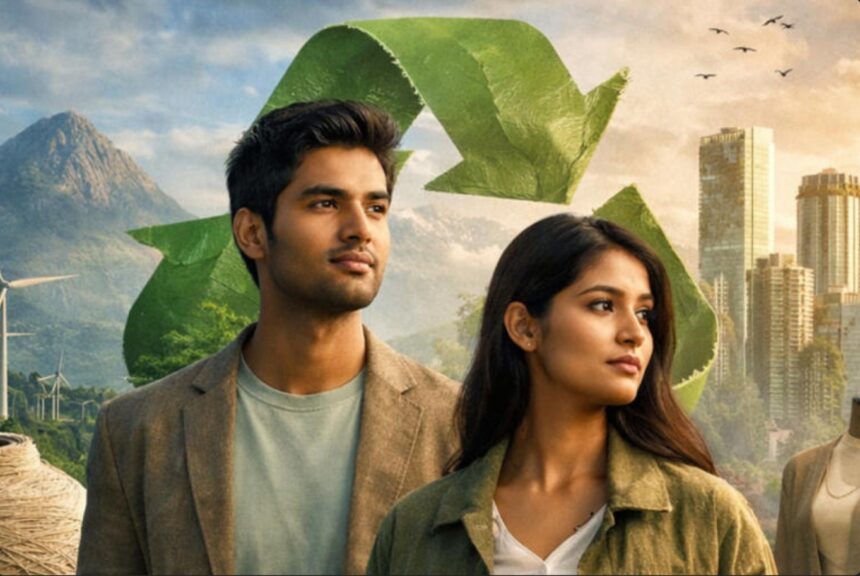
As Earth Day 2026 brings sustainability back into focus, the fashion industry is undergoing a structural shift. What was once driven largely by trends and mass production is now being redefined by responsibility—where materials, processes, and long-term impact matter as much as design.
At the center of this transition is material innovation. From recycled fibres to next-generation textiles designed for reuse, the industry is gradually moving toward a more circular model. In India, this evolution is not just timely—it is becoming essential.
A Changing Industry Landscape
India has long been a global leader in textile production, particularly in cotton. However, the sector is now expanding beyond its traditional identity. With growing domestic demand and improved access to technology, the industry is beginning to shift from being primarily export-driven to innovation-led.
At the same time, consumer expectations are evolving. Today’s buyers are looking beyond aesthetics, seeking garments that offer functionality, durability, and environmental responsibility. This shift is pushing brands to experiment with fabrics that combine performance with sustainability.



Beyond Recycling: The Need for Circularity
Recycled materials such as PET-based fabrics have gained visibility in recent years, but they represent only an early step. A larger challenge lies in addressing the lifecycle of clothing.
Globally, the fashion industry generates massive volumes of textile waste each year, with only a small fraction being reused in new garments. This gap highlights the need for circular systems—where products are designed from the outset to be recycled, repurposed, or regenerated.



Circular fashion moves beyond surface-level sustainability. It requires rethinking how clothes are produced, consumed, and eventually disposed of.
India’s Strategic Role
With one of the world’s largest textile ecosystems and a young, growing consumer base, India is uniquely positioned to influence the future of sustainable fashion. The sector is also a major source of employment, making innovation in this space both an economic and environmental priority.
Even incremental improvements in materials or manufacturing processes can create large-scale impact, given the size of the industry.
A Cultural Shift in Consumption
The movement toward sustainability is not driven by technology alone. It is also shaped by changing attitudes. Consumers are becoming more aware of the environmental cost of their purchases—questioning sourcing, production methods, and brand practices.
This growing awareness is encouraging more mindful consumption, where quality and longevity are valued over fast-changing trends.
The Road Ahead
As the industry adapts, material innovation is emerging as a key pillar of future growth. Whether through biodegradable fabrics, recycled fibres, or closed-loop production systems, the focus is shifting toward solutions that reduce waste and conserve resources.
Earth Day serves as a reminder that fashion’s future will depend not just on creativity, but on accountability. In a resource-constrained world, sustainability is no longer a niche—it is becoming the standard.